
Adiabatic Humidifier
Low-Energy Membrane Humidification
Transforming HVAC with Molecular Science
Steam and spray systems have been used for humidification for over 120 years. These older methods are costly to run and require a lot of upkeep. The DisruptorCC™ is a new kind of humidification system. It is powered by Aqualyte™ nanomaterials. The DisruptorCC™ delivers precise moisture control while cutting energy costs by up to 94%.
How the Adiabatic Process Works
Adiabatic humidification adds moisture to air using cold water, not steam. The word adiabatic means the process uses heat from the surrounding air to turn water into vapor. No outside heat source is needed. This makes it a natural and energy efficient way to control indoor humidity.
As water evaporates, it pulls heat from the air. This lowers the Dry Bulb Temperature and adds moisture at the same time. On a Psychrometric Chart, this exchange follows a line of Constant Enthalpy. The result is natural cooling with no extra refrigeration required.
Learn about The 2028 PFAS Cliff and Future-Proofing HVAC with Adiabatic Membrane Technology
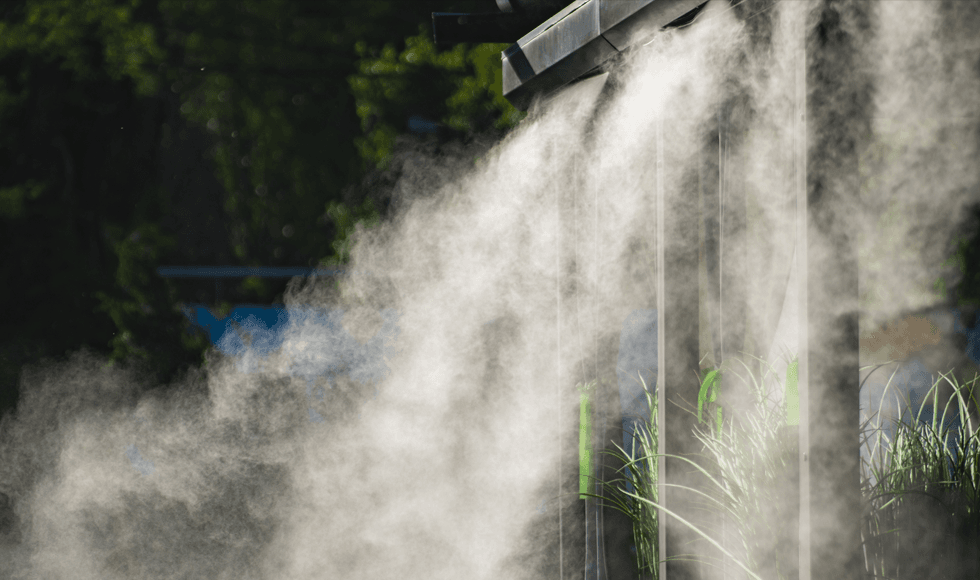
Adiabatic Humidification Example
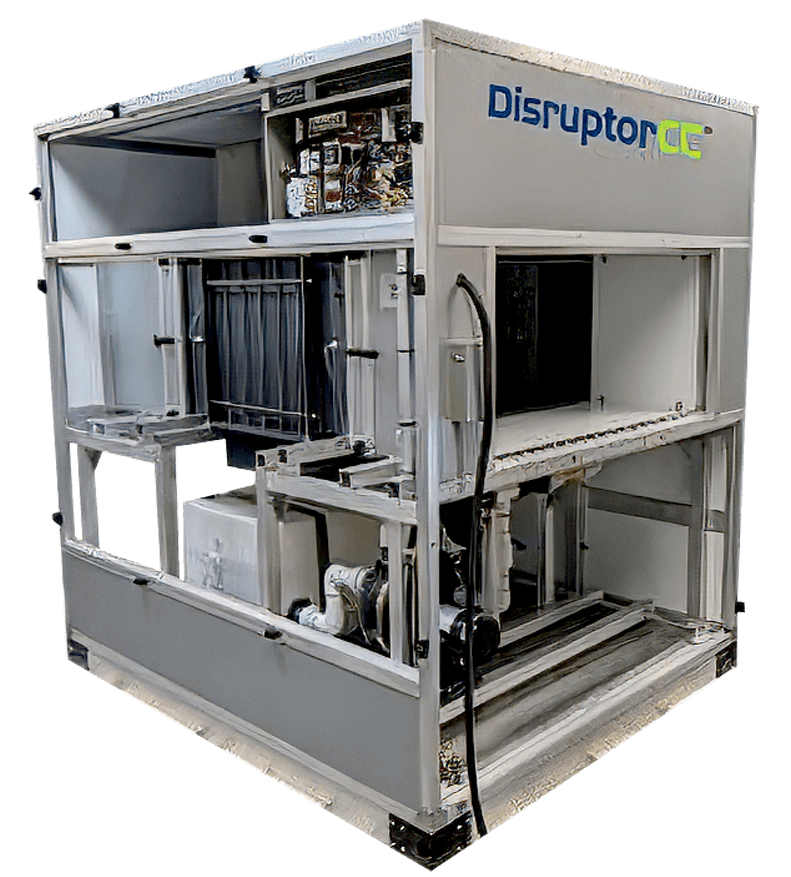
The DisruptorCC™ Membrane Humidifier
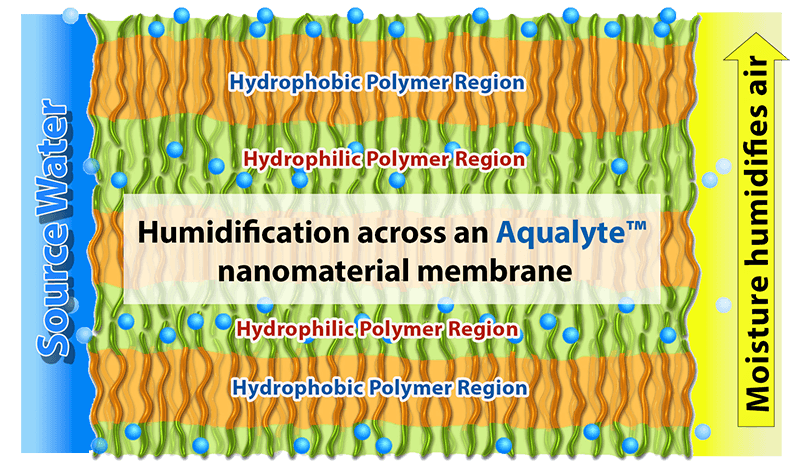
The DisruptorCC is an adiabatic humidifier and Aqualyte membrane that uses molecular permeation to provide adiabatic humidification in a single unit. It works without water treatment systems. No microbes or minerals get released into the air. Wet surfaces do not form.
The system gives precise moisture control. This works separately from temperature control. Users report up to 94% savings in energy costs. Large manufacturing facilities see huge drops in operating expenses.
The core of the DisruptorCC™ is its Aqualyte™ nanomaterial membrane. This patented membrane uses surface chemistry to control how molecules move through it.
- Selective Permeation: Water molecules pass through the membrane and evaporate into the airstream. This atomization water process is fast, clean, and highly controlled.
- Non-Porous Biological Barrier: The membrane is non-porous. This blocks Legionella bacteria, viruses, and dissolved minerals from passing through it.
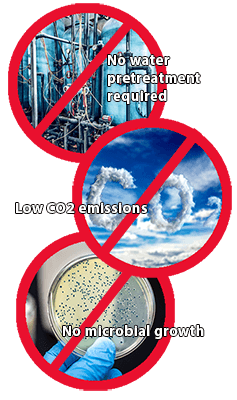
- Zero Pre-Treatment: The Aqualyte™ surface resists fouling. The system runs on standard tap water. No Reverse Osmosis or Deionization treatment is needed.
- Maintenance-Free Design: The membrane is built to last the full life of your equipment. No replacement is required.
Environmental Impact and Global Compliance
Tighter global standards are putting pressure on older HVAC systems.
- The PFAS Problem:
Many traditional refrigerants contain perfluoroalkyl substances, also known as PFAS. These are called forever chemicals because they do not break down in the environment. - Regulatory Change:
The European Union plans to restrict or ban many current refrigerants after 2028. Other regions are expected to follow this trend. - Carbon Reduction:
HVAC systems produce about 10% of all annual CO₂ emissions in the US. The DisruptorCC™ removes the need for chemical refrigerants. It also cuts energy use by a wide margin.
Case Study
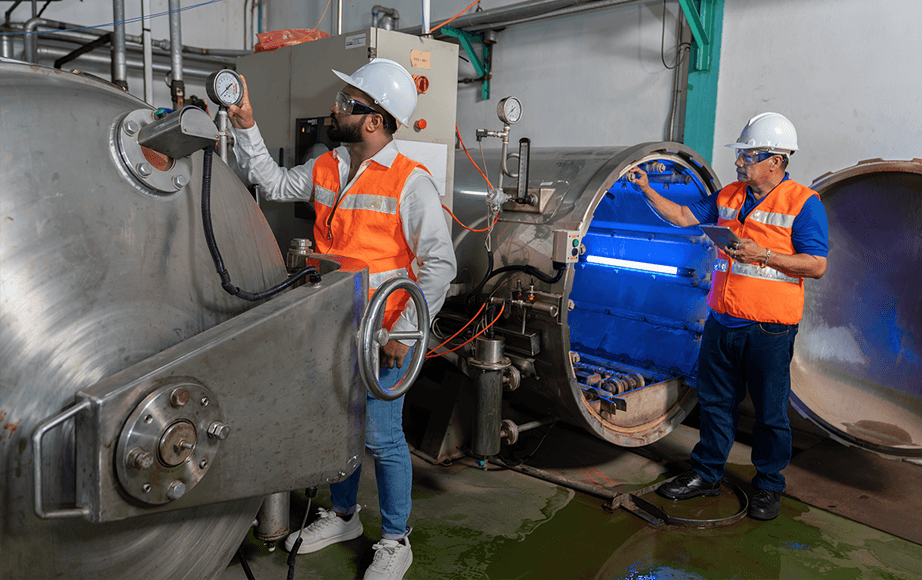
A client with a DisruptorCC™ system in their manufacturing facility in the US shared they shut down two steam boilers previously operated year-round (even at the height of summer when there is rarely a humidification requirement) and replaced them with a much smaller system to cover their non-humidification needs.
Their system fills that gap with clean, sterile humidification on demand, regardless of the time of year, and when not needed it waits passively. By contrast, the steam boiler system had no shutdown mode, as the steam would condense into distilled water that rapidly corrodes the inside of the metal piping system. Instead, the boiler generated steam pressure and circulated year-round, consuming energy and turning it into a significant waste heat load on the building’s HVAC system.
The client has reduced their refrigeration load from 1,076 tons to less than 60 tons, a savings of more than 94%!
Energy Efficient Humidification System Comparison
The DisruptorCC™ is an energy efficient humidification system. Its atomization water process delivers moisture at a very low cost compared to other methods. The table below compares the DisruptorCC™ to other common systems at an energy rate of $0.08 per kWh.
| Technology | Cost per 100 lb | Operation Notes | CAPEX 100 lbs/hr | Operating Expense 200,000 lbs./yr |
| DisruptorCC™ membrane humidification | $0.062 | No bacterial release. No wet surfaces or drain pans. Runs on tap water. | $6,800-$9,500 (projected) | $123 energy $200-$300 maintenance |
| Steam Heat Exchanger | $1.80 | Requires manual cleaning of mineral scale. High boiler energy use. | $5,100 | $1,000 $1,200 maintenance |
| Electric Canister Steam | $2.72 | Canisters replaced every 3–6 months due to scale buildup. | $7,000 | $5,440 energy $1,200-$1,700 maintenance |
| Cold-Water Fog | $0.05 | Requires RO water treatment. Risk of wet surfaces in air ducts. | $10,100 with RO system included | $100 energy $500-$800 maintenance |
| Ultrasonic | $0.30 | On-demand modulates output well. Requires DI water treatment to reduce mineral deposits in occupied spaces. Risk of bacterial growth & release. Does not scale well with size and requires many smaller units to achieve capacity. | $20,000-$25,000 with DI water system included | $640 energy $500-$800 maintenance |
Industry Standards and Resources
- ASHRAE Standard 62.1: Sets the guidelines for ventilation and indoor air quality. (Link to Standard)
- ASHRAE Standard 188: Covers risk management for Legionellosis in building water systems. (Link to Standard)
- VDI 6022: Sets global hygiene rules for HVAC systems and air handling units.
Regulatory Links
- EPA AIM Act: Oversees the phase-down of high global warming potential hydrofluorocarbons.
- EU PFAS Restriction: Details upcoming bans on persistent chemical refrigerants.
Want More Information?
You can also talk with one of our experts about your project or application requirements and see how Biz-Reps can help your organization.