
High Salinity Water Recovery Solution
The Problem: Why High-Salinity Wastewater is a Nightmare
In places like biogas facilities (which turn organic waste into green energy) and heavy industrial factories, water is used constantly for cooling, washing, and chemical processing. By the time this water becomes “wastewater,” it is crammed with Total Dissolved Solids (TDS)—mostly dissolved salts, minerals, and organic matter.
Imagine trying to clean water that is seven times saltier than the ocean, packed with toxic chemicals, and filled with thick biological sludge. That is the daily reality for wastewater treatment teams at industrial factories and biogas facilities. Cleaning this “high-salinity” water is one of the toughest challenges in environmental engineering.
This creates a few major problems for facilities:
Traditional Filters Quit Early: The gold standard for water cleaning has long been Reverse Osmosis (RO). RO works by using extreme pressure to force water through microscopic holes (pores) in a plastic sheet, leaving the salt behind. However, when salinity levels get too high (above 6% to 8%), the pressure required is too immense. The filters quickly clog up with minerals (scaling) and bacteria (biofouling), causing the system to break down.
The Brine Dilemma: Because RO can only clean a portion of high-salinity water, factories are left with a toxic, hyper-concentrated salty sludge called brine. Disposing of this safely is incredibly expensive and highly regulated.
The Push for “Zero Liquid Discharge” (ZLD): Environmental laws increasingly require facilities to reach ZLD, meaning zero wastewater can leave the facility into the local environment. Every single drop must be recycled or evaporated, which traditional pressure-based systems cannot do affordably.

The Standard Solution (And Why It Costs a Fortune)
To get around the limits of Reverse Osmosis, industries usually turn to thermal distillation—essentially boiling the salty wastewater so the pure water turns to steam, leaving the dry salt behind.
While effective, this is an energy hog. Boiling massive amounts of water requires a ton of electricity or fuel, making it a financial nightmare for companies. It also usually requires multiple expensive stages: filtering out big chunks first, running it through mild RO, and then using huge, expensive evaporators.
The Integrated Solution: DAIS NanoClear
This is where the DAIS NanoClear system steps in. Instead of using brute-force pressure (like RO) or massive boiling chambers (like standard thermal distillation), NanoClear uses advanced nanotechnology to blend the best of both worlds into one streamlined process.
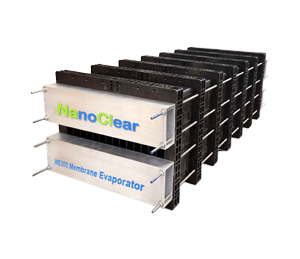
1. The Core Secret: The Aqualyte™ Membrane
At the heart of the NanoClear system is a patented material called Aqualyte. Unlike standard filters, this ultra-thin membrane has absolutely no pores (holes).
Because it is completely solid, it is physically impossible for salts, organic gunk, or even “forever chemicals” (like PFAS) to clog it. Furthermore, the membrane is naturally acidic inside, which acts like a built-in shield that stops bacteria and fungi from growing, preventing biofouling entirely.
2. The Process: Solid-State Pervaporation
Instead of pushing liquid water through pores using high pressure, NanoClear uses a process called pervaporation, driven by low-grade waste heat (around 50 to 70°C) that the factory or biogas plant is already producing and throwing away.
(Absorption): The Aqualyte membrane acts like a selective sponge. It attracts and absorbs only pure water molecules on one side, completely ignoring the salts and chemicals.
Travel: The water molecules zip through internal atomic-level channels within the solid membrane at incredibly high speeds.
Evaporation: The waste heat causes the water to escape out the other side as a clean, low-pressure vapor.
Condensation: This pure vapor is cooled back into liquid water that is unbelievably clean—often 100 times cleaner than US EPA drinking water standards.
Why NanoClear is a Game-Changer for Biogas and Industry
By integrating membrane technology with thermal science, NanoClear fixes the exact pain points industrial facilities face:
Handles Extreme Salinity: While standard systems choke at 7% salinity, NanoClear can effortlessly treat water up to 25% salinity (250,000 mg/L) without slowing down or using more energy.
Slashes Energy Costs: Because it runs on low pressure and uses low-grade waste heat (which is basically free energy at a factory), operating costs can drop by a massive fraction compared to traditional boiling methods.
Massive Water Recovery: The system can recover 60% to 99% of the clean water from the waste stream. This shrinks the terrifying mountain of leftover brine down to a tiny, manageable amount, making Zero Liquid Discharge actually achievable.
Simplifies the System: Instead of needing a massive layout of ultrafiltration, chemical treatments, and reverse osmosis stages, a single pass through a NanoClear module replaces them all.
In short, it takes a highly complex, multi-million dollar environmental problem and solves it using free factory heat and a smart, un-cloggable piece of nanotech.
What is High Salinity Water Recovery?
To understand High Salinity Water Recovery (HSWR), it helps to break the phrase down into its two halves: High Salinity (the nature of the problem) and Water Recovery (the goal of the process).
In simple terms, it is the advanced engineering process of squeezing clean, reusable water out of industrial wastewater that is so intensely salty and contaminated that ordinary filtration systems would instantly clog or break down.
Part 1: What Counts as "High Salinity"?
To understand the scale of the problem, water treatment experts measure salt using ppm (parts per million). This simply tells you how many milligrams of dissolved solids are packed into a single liter of water.
| Water Type | Typical Salinity Range | Can Standard Filters Handle It? |
| Tap Water | 100 – 500 ppm | Yes, easily. |
| Ocean Seawater | ~35,000 ppm | Yes, using standard coastal desalination. |
| High-Salinity Wastewater | 60,000 – 250,000+ ppm | No. Normal filters fail due to extreme pressure limits and clogging. |
This extreme wastewater is generated by chemical plants, oil drilling sites, factories, and biogas facilities. It isn’t just heavy on table salt, either; it is usually a harsh cocktail of sodium, calcium, magnesium, sulfates, and industrial compounds.
Part 2: The Logic of "Water Recovery"
“Recovery” refers to the percentage of clean water you successfully rescue from the waste stream to reuse in the facility.
If a factory takes in 100 gallons of wastewater and extracts 90 gallons of pure water, they have achieved a 90% recovery rate. The remaining 10 gallons become an incredibly thick, muddy salt liquid called brine.
This creates a massive engineering headache due to a fundamental law of physics: The more clean water you pull out, the saltier and more concentrated the remaining wastewater becomes.
As a system approaches ultra-high recovery rates, the leftover liquid gets so crammed with salt that minerals begin crashing out of the solution. This forms a thick, rock-like crust (called scaling) that can quickly destroy pipes and machinery.
How Biz-Reps Helps You Integrate

Integrated Solutions Consulting
Biz-Reps is more than a manufacturer’s representative, we offer comprehensive consulting services to fully understand your application needs and situation. Being the manufacturer’s representative gives us the advantage of collaborating with the manufacturer on specs and technical information. It also provides us with better inventory control and pricing retailers can’t offer.
We understand the importance of consulting with our clients to help them find the best solution for their needs and work on an individual basis to ensure the integrated solutions we provide are tailored to them.
Have Questions or Want More Information?
Biz-Reps is here to help. Contact us with your questions. Tell us about your needs. We will explain which systems work best for you. We offer free consulting to help you find answers and solutions.
