
Wastewater Treatment Membrane Filtration NanoClear™
NanoClear™ Pervaporation Solutions
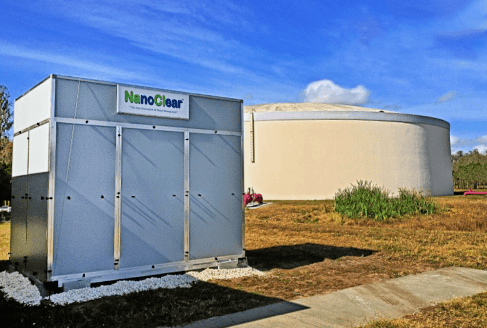
Most wastewater treatment membrane filtration systems use high pressure and porous filters that can foul and break down from chemical exposure over time. NanoClear takes a different approach by using a heat-based process to move water through a solid nanostructured polymer, with no high pressure required.
The NanoClear™ modules rely on the PolyCool™ loop to maintain lower condenser temperatures , ensuring consistent production of high-quality water with TDS < 10mg/L.
Economic Impact: When integrated into the NanoConcentrator™ framework, NanoClear™ contributes to a system capable of achieving simple payback in as little as 14 months.
Understanding Membrane Filtration Technology
Spiral wound membranes are a very common design used in reverse osmosis RO and ultrafiltration UF systems, rolling flat membrane sheets into a coil to fit more surface area into a compact space. Cross flow filtration is also a key part of how most membrane filtration systems operate, with feed water flowing across the membrane face rather than straight through it to sweep away buildup and keep the membrane clean. The applications of membrane filtration span a wide range of uses, from drinking water treatment and food processing to complex industrial wastewater cleanup.
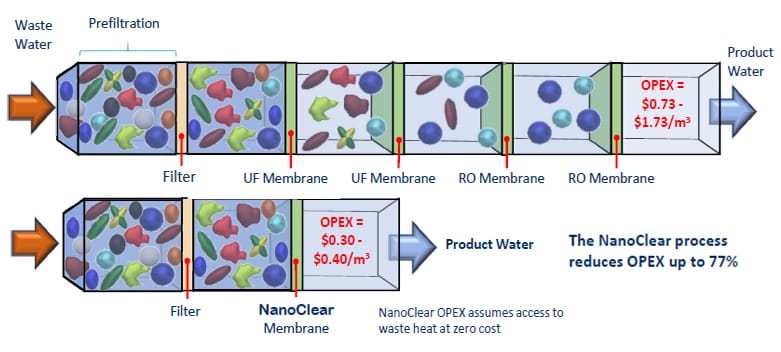
Click to Enlarge
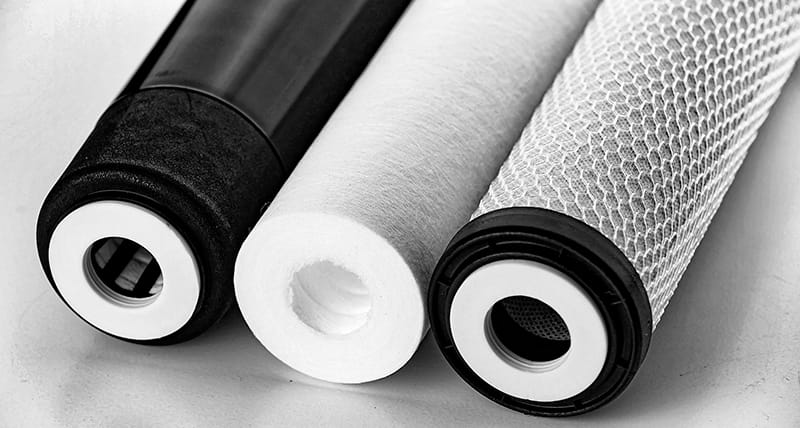
Common Membrane Filters
The Mechanism: Solid-State Pervaporation
Three key traits make this approach stand apart from standard membrane filtration processes:
- The membrane strongly favors water while blocking ions, salts, and organic compounds, as well as gases like O2 and N2.
- The smooth surface resists biofouling because the membrane’s internal acidic state stops bacteria and fungi from growing, a fact confirmed by ASTM G-21 and G-22 tests.
- The output water has TDS below 10 mg per L, which is about 100 times cleaner than current US EPA drinking water standards.
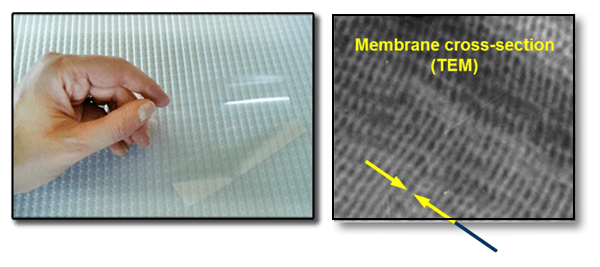
Dark areas in image are 5 – 20nm wide regions of solid hydrophilic polymer.
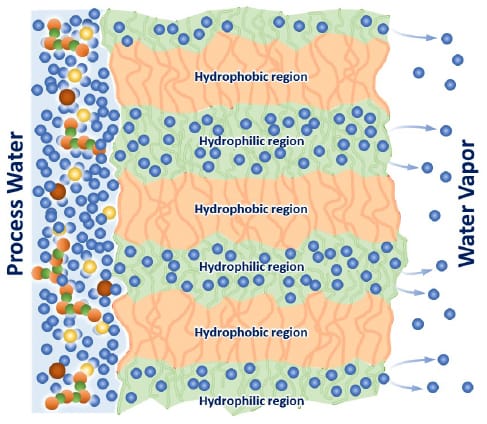
Click to Enlarge
Substance Reduction Performance
| Substance | Before (mg/L) | After (mg/L) | Reduction |
| Calcium | 3,100 | 0.219 | 100% |
| Cesium | 5,000 | 0.0012 | 100% |
| Chloride | 132,000 | 4 | 100% |
| TDS (Total Dissolved Solids) | 230,000 | 8 | 100% |
| COD (Chemical Oxygen Demand) | 50,300 | 13 | 100% |
| Sulfate | 15,100 | 17.8 | 99.9% |
| Sodium | 1,500 | 65.2 | 99.9% |
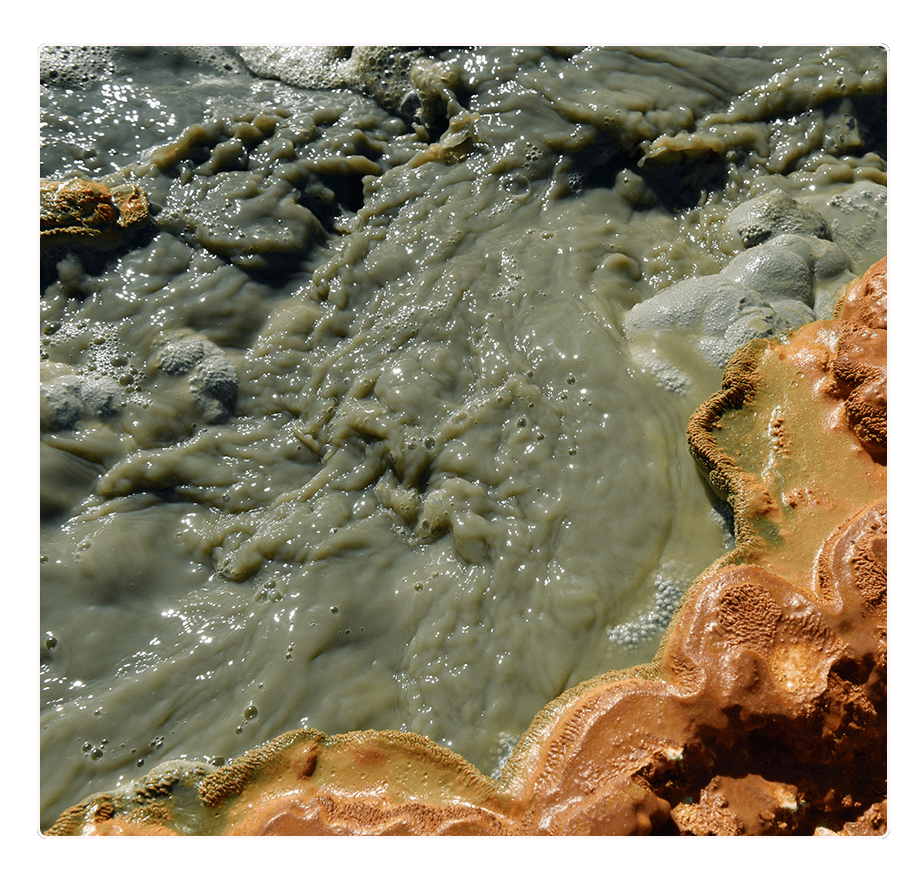
Achieving 100% Contaminant Reduction in Industrial Wastewater Treatment
Built for Harsh Environments
Industrial Economic Impact — ME3XX Series
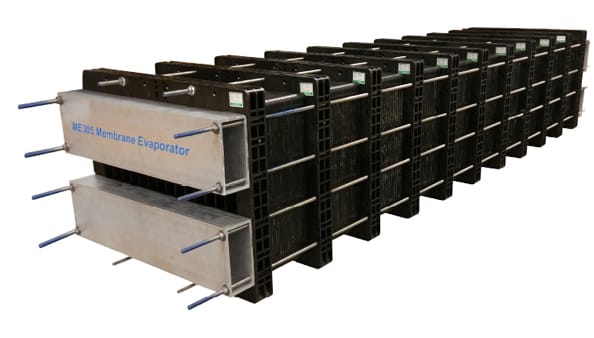
ME3XX Module Specifications
| Model | Production Capacity (L/hr) | Active Membrane Area (m²) | Peak Thermal Energy Input (kW) | Wastewater Flowrate (LPM) |
| ME301 | 20 | 6.75 | 14 | 193 |
| ME3H2 | 100 | 1.35 | 70 | 38 |
| ME303 | 300 | 20.3 | 210 | 580 |
| ME305 | 500 | 33.8 | 350 | 967 |
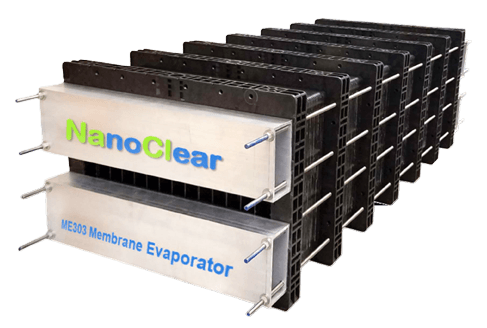
NanoClear – ME303
Zero Liquid Discharge Applications
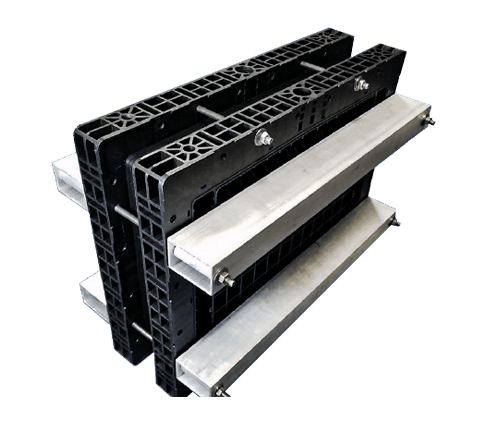
NanoClear – ME3H2
Verified Data Summary
- NanoClear reaches 100% removal of Calcium, Cesium, and Chlorides from industrial wastewater, as confirmed by direct test results.
- Its output water is 100 times cleaner than US EPA drinking water standards by direct measurement.
- The system delivers 99.9% removal of Sulfates, Sodium, and Potassium.
- Zero biofouling performance is confirmed by ASTM G-21 and G-22 test results.
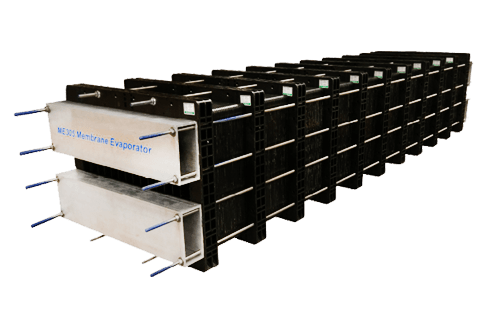
NanoClear – ME305
NanoClear FAQs
Q: How does NanoClear handle extreme salinity compared to traditional reverse osmosis RO?
Standard reverse osmosis RO systems start to struggle when salinity exceeds 6 to 8 percent, causing energy costs to rise and RO membranes to break down. NanoClear is built to treat wastewater up to 25 percent salinity, or 250,000 mg per L TDS, without those limits. Because the Pervaporation process is driven by heat rather than pressure, energy use stays flat even as total dissolved solids increase in the wastewater feed.
Q: What pretreatment and maintenance does the system require?
The system requires only basic suspended solids filtration down to 20 microns and a pH level between 2 and 11 to operate at full output. If membrane filtration works less well over time, a simple one-hour citric acid flush is all that is needed to restore performance, with no complex repairs required.
Q: How pure is the output water from the NanoClear process?
NanoClear puts out water with TDS below 10 mg per L in most cases and often as low as 1 mg per L in a single pass, regardless of how much dissolved solids were in the source water. This output is about 100 times cleaner than US EPA drinking water standards and qualifies as parts-per-billion clean.
Q: Can the system operate using waste heat from an industrial facility?
Yes. NanoClear uses low-grade waste heat between 50 and 70 degrees C to drive the Pervaporation process, so plants can turn excess heat into treated water rather than letting it escape. Facilities that use available waste heat can reduce their power use to as low as 4 to 5 kWh per cubic meter of product water.
Q: How effective is NanoClear at removing PFAS and other emerging contaminants?
NanoClear is very effective at removing forever chemicals, and third-party tests confirm this across a wide range of compound types. The system was tested against 36 types of PFAS, including PFOA, PFOS, and GenX, starting from an input level of 2,000 parts per trillion. All 36 types were reduced to levels that were not detectable by the lab tools used in testing.
Q: How does the Aqualyte™ membrane resist biofouling without heavy chemical treatment?
The Aqualyte™ membrane has no pores, which means there is no place for bacteria, debris, or organic compounds to become lodged or trapped. Its smooth, water-loving surface forms a thin water layer that acts as a shield and prevents foulants from sticking to the membrane face. The membrane also has a natural acidic state that stops microbial growth on its own, a property confirmed by ASTM G-21 and G-22 testing.